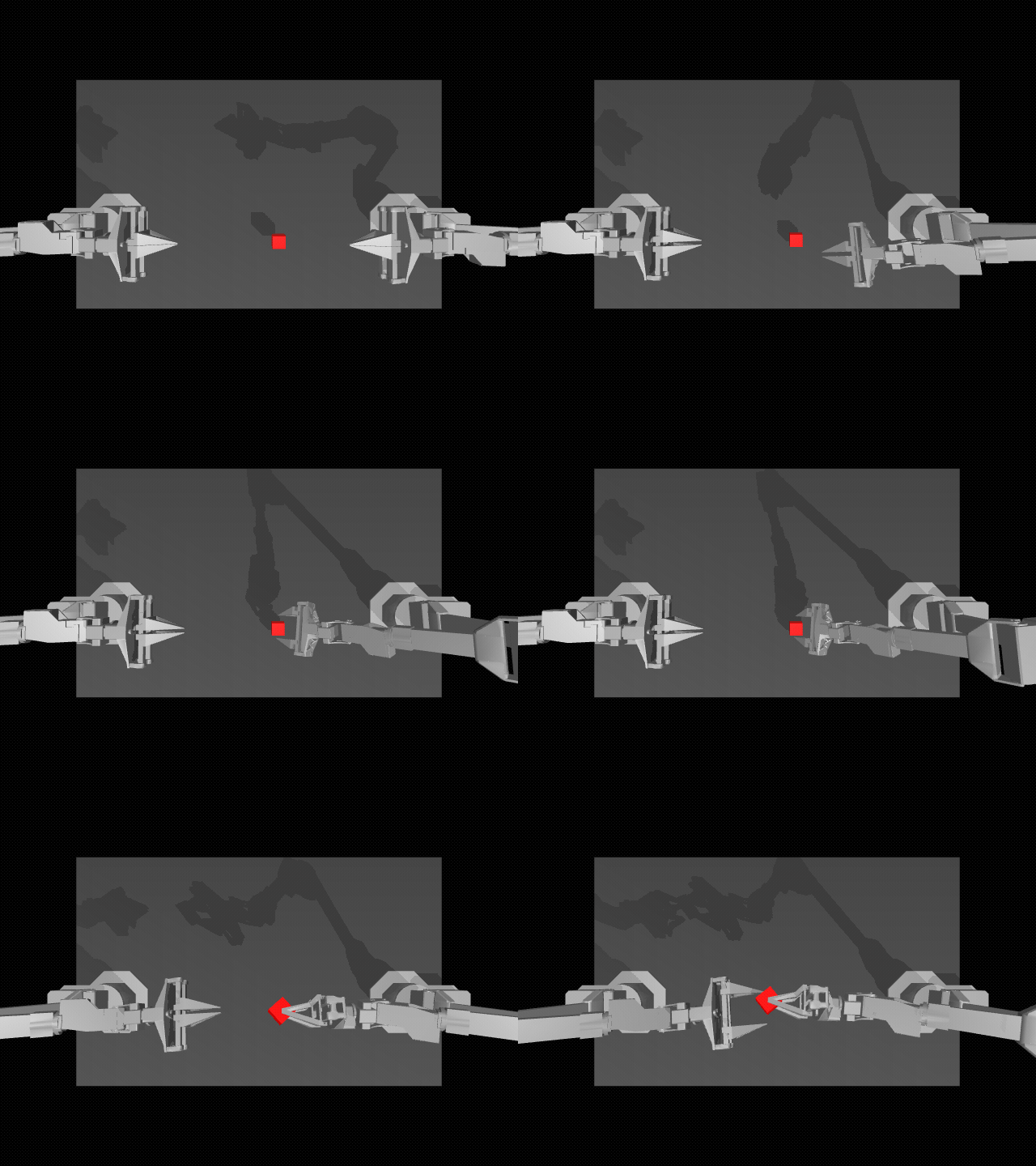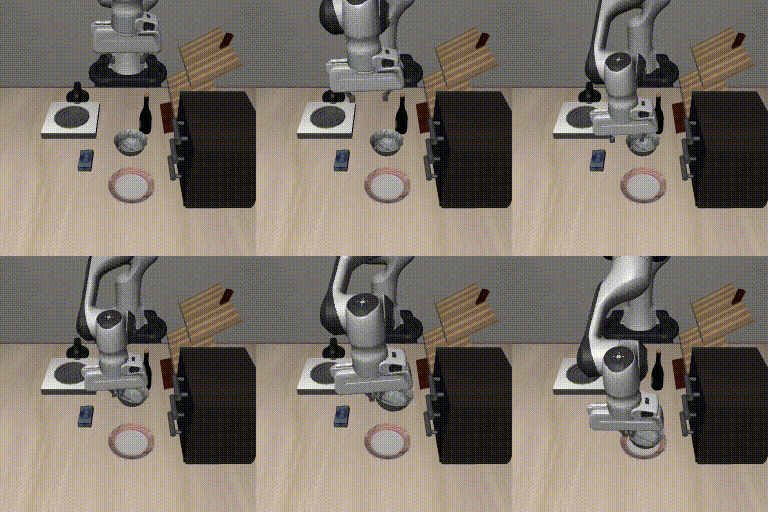
This project began with the wrong policy contract. We trained ACT checkpoints at 1k, 3k, 5k, and 10k steps, but none completed PushT. The policy observed one frame and could execute a 100-action chunk at 10 Hz, which was most of an episode before it looked again.
More training would not fix that control loop. We kept the unsuccessful runs, changed direction, and built the application around LeRobot’s published Diffusion Policy checkpoint instead.
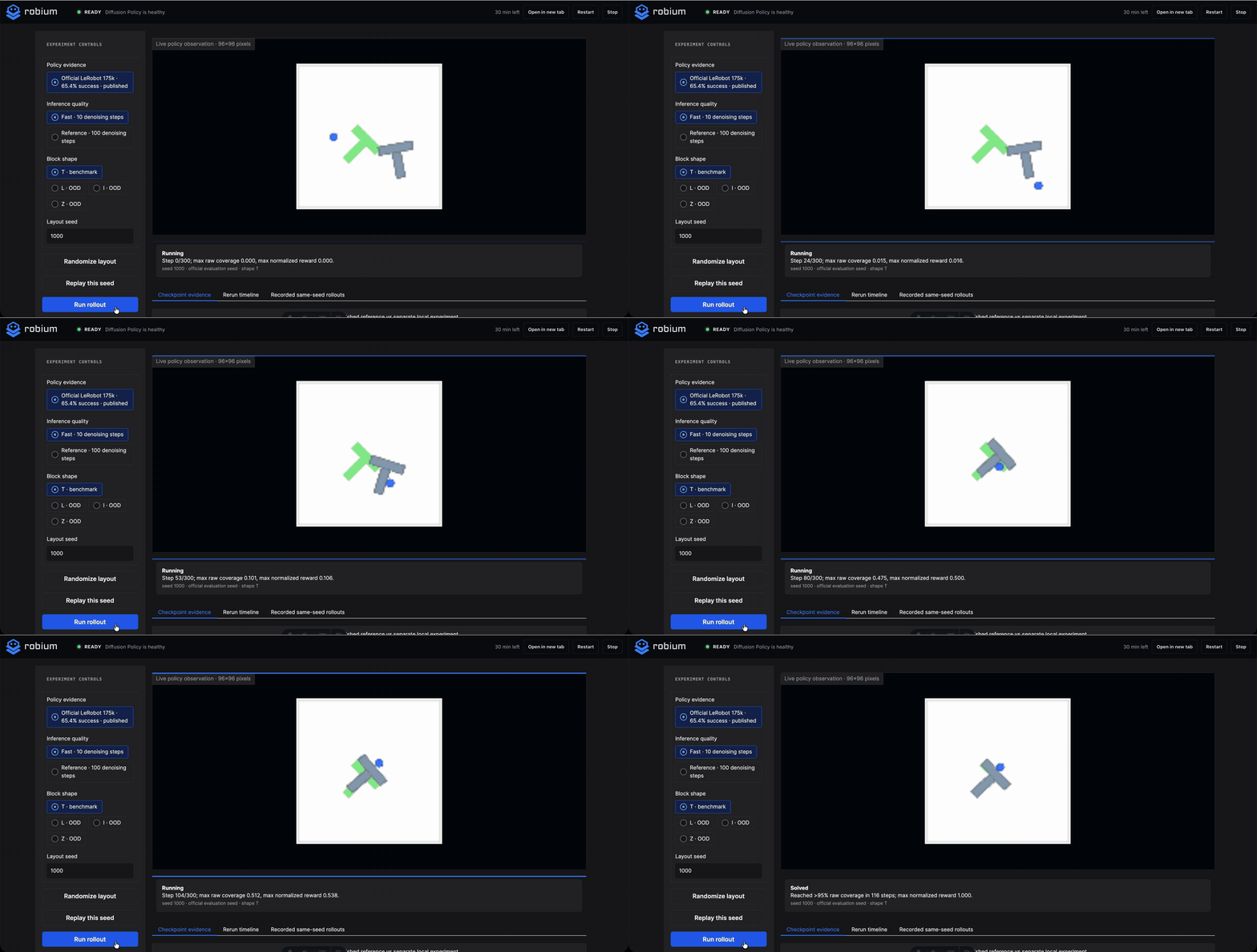
A recorded rollout from the browser workspace. The live frame stays visible while the policy replans and Rerun records the trajectory.
PushT is small, but the contacts are not simple
PushT uses a circular agent to push a T-shaped block into a green target. The observation is a 96 by 96 RGB image plus the agent position. The action is the next 2D position command. An episode succeeds when the block covers more than 95 percent of the target.
The policy has to choose useful contact points, rotate and translate the block, recover after losing contact, and handle different initial layouts. Several action sequences can make sense from the same image.
Diffusion Policy fits that shape of problem. It starts with a noisy action sequence and refines it while conditioning on the current observation. PushT is also an established evaluation task for the method, and LeRobot publishes a task-matched checkpoint with a 500-episode result.
[!DECISION] ACT remains a useful baseline for demonstration-driven manipulation, but our execution horizon did not fit PushT. A VLA would add language and model cost to a task whose objective is entirely geometric. Diffusion Policy matched the behavior and the available checkpoint.
What runs between the frame and the next move
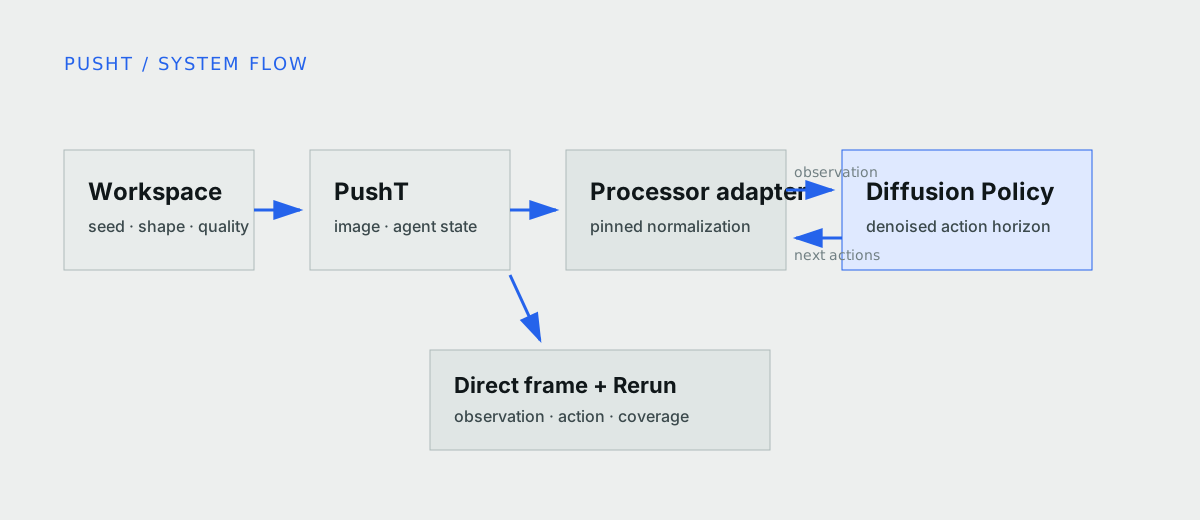
The policy turns the current image and agent state into a denoised action sequence. The simulator executes a short horizon, then the policy observes again.
The workspace exposes two inference settings. Fast uses 10 denoising steps for more responsive local interaction. Reference uses 100 steps, matching the published evaluation schedule. The setting changes inference compute, not the model weights.
The T shape routes directly to the upstream gym_pusht/PushT-v0 environment.
L, I, and Z are qualitative geometry probes built locally. They are useful for
watching behavior outside the benchmark, but they were not part of the
checkpoint’s training task.
Keep the layout seed fixed when comparing settings. Seeds 1000 through 1499 match the official evaluation range; other seeds are labeled qualitative.
Run the native Mac path
The tested local path uses Apple Silicon, uv, ffmpeg, a modern browser, and port 8765. It does not require an NVIDIA GPU, physical robot, or training run.
npx robium-ai@latest setup
git clone https://github.com/robium-ai/robium-apps.git
cd robium-apps/diffusion-policy-pusht
./app doctor
./app run
Open http://localhost:8765. The first build downloads roughly 1 GB for the pinned model. Native PyTorch uses MPS; the optional Docker image uses CPU inference because Docker Desktop cannot expose Metal to Linux.
The application README contains the remaining launcher commands and setup details.
The checkpoint adapter had to preserve old statistics
The checkpoint is pinned to revision
84a7c23178445c6bbf7e1a884ff497017910f653. It predates LeRobot 0.6’s separate
policy_preprocessor.json and policy_postprocessor.json files, so a current
loader cannot open the repository as published.
Our first adapter generated processors from the current PushT dataset. The model loaded, but its behavior was poor. The checkpoint already contained the normalization buffers it expected, including ImageNet image mean and standard deviation, and those values differed from the current dataset statistics.
The application now reads the embedded image, state, and action buffers, creates current processor files from those tensors, leaves the weights unchanged, records the source revision, and checks tensor equality before inference.
The environment needed the same care. A custom T looked right but had different inertia from the benchmark. The reference path now uses the upstream T exactly; only the optional letter probes use custom geometry.
What the runs say
LeRobot’s model card reports 65.4 percent success and 0.955 average maximum normalized reward over 500 episodes for the official checkpoint.
The stopped local 5k ACT experiment recorded one success in 30 completed episodes. It remains available as a separate experiment, not as a point on the official checkpoint’s curve.
After the processor and environment fixes, a native Reference rollout on seed 1000 completed in 231 steps, reached 0.955 maximum raw coverage, and took 164 seconds on the tested Apple M5. The container path later completed the same seed in 116 steps at 0.953 raw coverage.
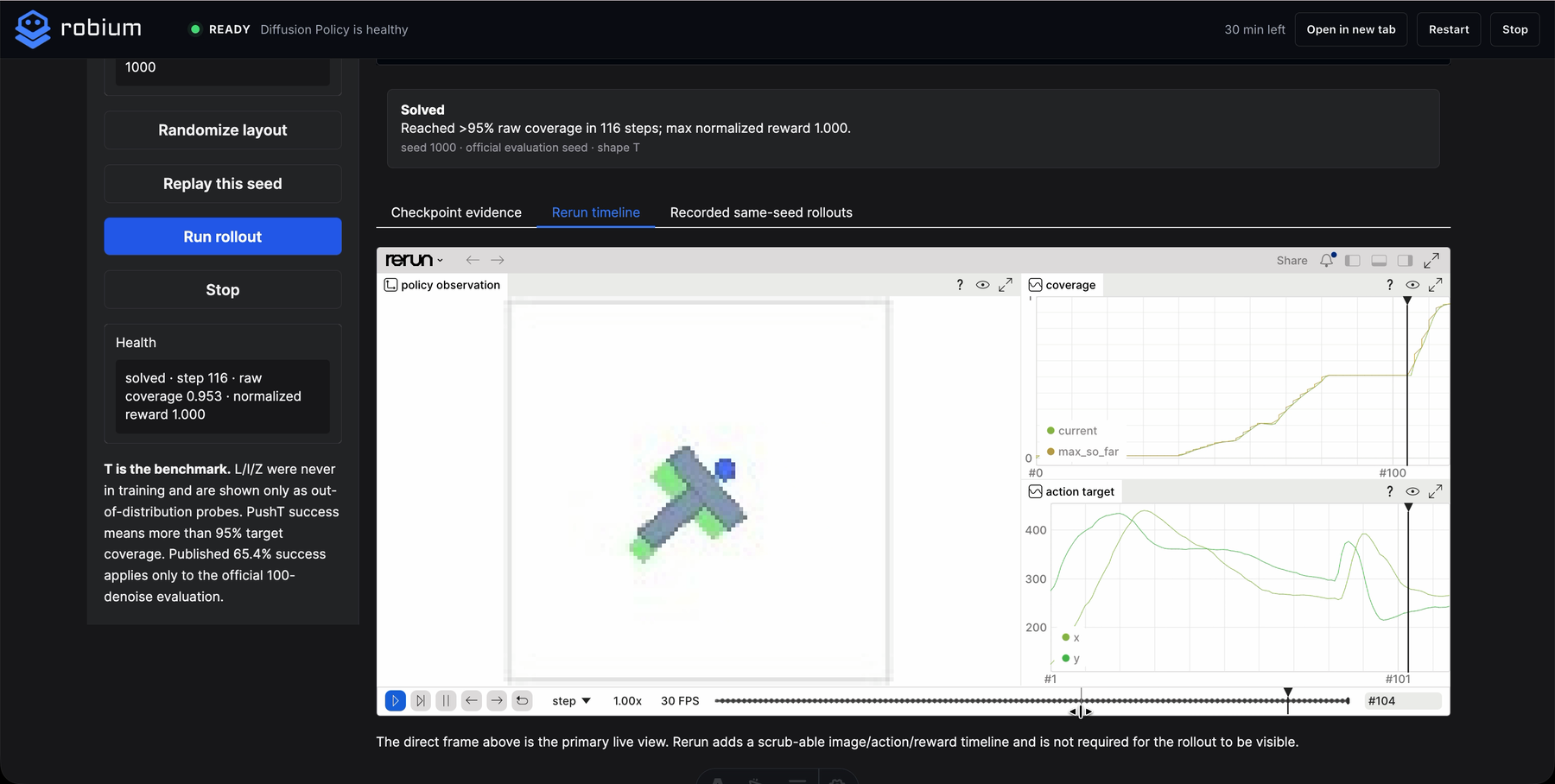
The direct frame shows the final layout. Rerun aligns observation, action, and target-coverage timelines for the same episode.
[!EVIDENCE] These seeded episodes check the adapter and runtime paths. The published 500-episode result remains the larger evaluation.
From local workspace to a temporary browser session
The local process uses MPS and remains the faster Mac experience. The website path uses a multi-stage CPU image containing the pinned checkpoint, processor files, application source, and Linux-only CPU PyTorch wheels. Hub access is disabled at runtime.
A FastAPI gateway mounts Gradio at /ui and exposes start, status, and shutdown
for one private session. The policy loads in the background, rollouts are
serialized, and the session expires after 30 minutes. Local container testing
covered claim isolation, the visible observation, a complete rollout, and
container removal on Stop.
The failed policy stayed useful
The lerobot skill helped separate a policy choice from a configuration
mistake. testing kept the failed ACT run, stopped local benchmark, official
checkpoint result, and individual rollouts from becoming one misleading chart.
environments preserved the native MPS path while live-demo and integration
shaped the CPU image and private-session boundary.
The most consequential test was not “the checkpoint loads.” It compared the adapter’s tensors with the values embedded in the pinned model, used the upstream T dynamics, and ran a seeded episode to completion.
Where the comparison stops
This application runs an existing checkpoint. It does not establish that Diffusion Policy is the best choice for every contact task, and the L, I, and Z shapes are qualitative probes rather than benchmark results. Fast inference uses fewer denoising steps than the published schedule. The CPU container is convenient for delivery, but native MPS remains quicker on Apple Silicon.
Source, smoke tests, and the architecture brief are available in the PushT application.